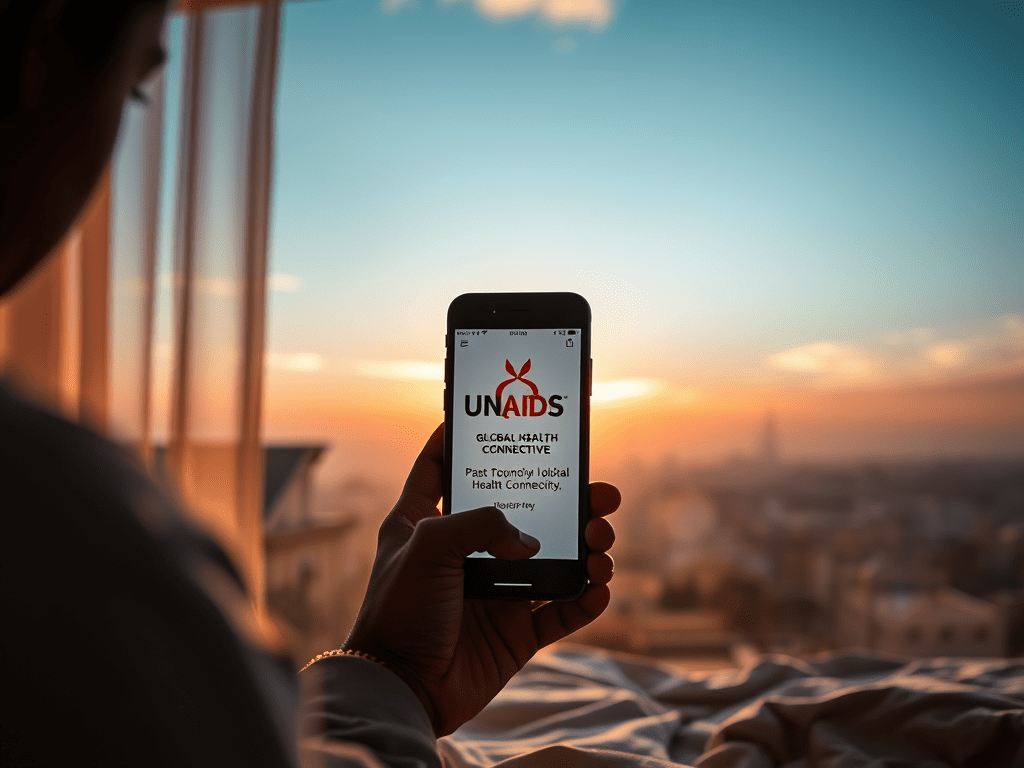
The WhatsApp message arrives at 05:43 AM, cutting through the pre-dawn stillness of Antananarivo. It’s from my Comoros colleagues. It is about the participation of the Comoros participants at the Indian Ocean HIV and AIDS Colloquium. The government has decided that Comoros non participation due to a diplomatic row between the two islands countries. A ship full of students from Comoros were not allow to land to resume their studies. The reason was because of cholera in the Comoros. My phone buzzes again: Johannesburg regional office is requesting urgent data for tomorrow’s SADC briefing. Then another: Mauritius about the data for the Global AIDS Monitoring reporting.
I reach for my phone and then pause. Through my bedroom window, the houses and trees are silhouetted against Madagascar’s awakening sky, and suddenly. I remember my twelve years old self on Mahé island, watching my grandmother tend her herb garden before sunrise. “God, gave you two hands,” she used to say in Kreol. “But that does not mean you must carry the whole world in them.”
Twenty-five years later, I coordinate the United Nations’ HIV responses across four island nations. I manage relationships from Geneva to government ministries across the Indian Ocean. I’ve learned that my grandmother’s wisdom applies just as much to global health leadership as it did to her garden.
The Weight of Always Being “On”
In our field, unplugging feels almost morally complicated. Your work involves HIV prevention, treatment access, and saving lives across Madagascar, Comoros, Mauritius, and Seychelles. Ministers call seeking guidance on strategic and policy decisions that affect thousands. In such situations, the luxury of being unreachable feels selfish.
I remember my first week as multi-country director. I was based here in Antananarivo. My responsibility was to coordinate responses across vastly different contexts. A key population community in Toamasina faces stigma barriers. Urban youth in Port Louis need prevention services, whereas rural populations in Madagascar’s highlands often lack access to healthcare infrastructure.
The complexity was intoxicating and overwhelming. Different languages, currencies, political systems, and cultural approaches to health and sexuality. I found myself checking emails at 2 AM. I was taking calls during dinner time. I was reading epidemiological reports while in the car to the office or in a “taxi-brousse” to Antsirabe.
My turning point came during a UN Country Team Retreat in Mauritius. After three sleepless nights preparing presentations, I dozed off during a critical session. A colleague—a wise public health WHO veteran from India—pulled me aside afterwards.
“My brother,” she said, “you think you’re being dedicated, but you’re modelling unsustainability. How do you expect your teams to maintain long-term commitment if their director burns out in front of them?”
Learning to Unplug Across Cultures and Crises
Working in global health across the Indian Ocean taught me many lessons. Unplugging strategies must account for cultural contexts. They must also consider time zones and the unpredictable nature of development work. You can’t simply implement Silicon Valley-style digital detox when dealing with cyclone seasons. Political transitions and health emergencies don’t respect office hours, requiring tailored approaches.
The Island Rhythm Method: Growing up in Seychelles embedded certain rhythms. These include the tide patterns that fishermen follow. They also encompass the seasonal cycles that farmers respect and the family and community gatherings that happen regardless of work pressures. I have adjusted this to my current role. I achieve this by creating what I call “natural boundaries”. These boundaries honor both professional demands and human sustainability.
Morning Anchoring (5:00-7:00 AM): Before checking any messages, I spend ninety minutes in what I call “Seychellois time.” I spend time in meditation and gym time. I travel through my neighbourhood in Antananarivo. I observe how vendors set up the market. This isn’t just personal time; it’s strategic grounding that prepares me for whatever crisis awaits.
Midday Breathing Space (12:30-1:30 PM): One hour completely offline.
Sometimes, I walk around Galaxy in Andraharo. Other times, I explore Analakely’s side streets. Occasionally, I sit in my office with the door closed and my phone in aeroplane mode. My assistant knows unless someone is dying, it waits.
Evening Transition (6:00-7:00 PM): The most crucial hour. I review the day’s priorities. Then, I prepare tomorrow’s focus areas. After that, I physically close my laptop. I also put my work phone in a drawer. The symbolic act of closing the computer creates psychological separation between the UNAIDS Director, me and simply me. Every day at 7:00 PM, without fail, I have a Google Meet session with my mother.
Managing Global Expectations
The challenge of unplugging while managing relationships from Geneva to government ministries required developing what I call “strategic unavailability.” This isn’t about being irresponsible—it’s about being sustainably effective across multiple time zones and cultural contexts.
Time Zone Leverage: Madagascar is located in the GMT+3 time zone, which creates natural buffers. When Geneva (GMT+1) start their day, I have had several hours of productive time. I use these gaps strategically—periods when I’m naturally less expected to be immediately responsive.
Cultural Translation: I worked across Francophone and Anglophone contexts. I also engaged with Islamic and Christian communities. Additionally, island and continental mentalities were part of my experience. This taught me that unplugging looks different everywhere. In Comoros, Friday afternoon unavailability is understood and respected. In Mauritius, the multicultural workforce expects accommodation for various religious observances.
Delegation with Context: I’ve trained my colleagues in the multi-country office to make autonomous decisions within defined limits. Some colleagues leads community engagement activities, others UN Joint Team on AIDS work-plan implementation, others communications. This isn’t just good management—it’s a survival strategy for sustainable unplugging.
The Guilt Factor in Global Health Work
The hardest part of unplugging in our sector isn’t technical—it’s emotional. When your inbox contains requests that involve life-and-death decisions, the guilt of being unreachable feels overwhelming. Delayed responses might affect treatment access for vulnerable populations. I confronted this directly during last year’s cyclone season. Madagascar faced devastating flooding that disrupted HIV services across the island. My instinct was to remain glued to my phone, coordinating responses.
Instead, I established “crisis rhythms”—intensive availability periods alternating with mandatory recovery breaks. Four hours intensely engaged, one hour completely offline. This pattern sustained me through three weeks of emergency response. It prevented burnout. Without it, I would have been useless in week four.
The results surprised everyone, including me. My decision-making remained sharp because I wasn’t operating on accumulated sleep deprivation. My team felt supported but not micromanaged. Most importantly, we maintained effective services throughout the crisis because leadership remained sustainable.
Creating Permission for Others
One unexpected outcome of establishing unplugging boundaries was that it permitted my teams to do the same. When I stopped sending emails after 7 PM, my national program officer stopped feeling pressured to respond instantly. When I started taking genuine lunch breaks, my other colleagues began protecting their midday rest periods.
A colleague in the office once told me: “When you started taking time off, it showed us something important.” This work is a marathon. It’s not a sprint. That changed how I approach my sustainability.
This ripple effect extends beyond our immediate team. Government counterparts began respecting boundaries when they saw I modelled them consistently. Partners began scheduling meetings more strategically. They realized I had protected certain time blocks for deep work and reflection.
Practical Strategies That Work in Development Context
The Physical Separation Method: I keep two phones—one for UNAIDS work and one for personal use. During unplugged hours, the work phone stays in my office. Physical distance creates psychological distance.
The Cultural Excuse Strategy: “I’m observing Seychellois family time” or “respecting Madagascar’s evening traditions” provides culturally legitimate reasons for unavailability. International partners understand and respect these reasons.
The Analog Alternative: During offline hours, I engage in activities that require full presence. I cook traditional Seychellois Kreol food, which demands constant mindful attention. I also write in physical journals and read printed reports. These activities don’t trigger the urge to check notifications.
The Accountability Partnership: My counterpart, who covers Botswana, Namibia, and Eswatini, and I rotate our weekend availability. When it’s my offline weekend, she handles regional emergencies. When it’s hers, I provide coverage. This system prevents the anxiety of “What if something urgent happens?”
When Unplugging Becomes Leadership Development
The counterintuitive discovery: strategic unplugging improved my effectiveness as a multi-country director. Those protected morning hours generate breakthrough solutions for complex cross-cultural challenges. Offline time often yields innovative approaches to addressing resource constraints or navigating political sensitivities.
Six months after implementing structured unplugging, our regional program performance indicators improved across all four countries. Team satisfaction scores increased. Most tellingly, our donor reviews consistently highlighted “strategic vision” and “innovative problem-solving”—direct results of protected thinking time.
My supervisor in Johannesburg commented during my last performance review. “Your ability to see the bigger picture has strengthened notably. You also manage day-to-day operations effectively.” What’s your secret?
The secret was learning that sustainable leadership requires sustainable leaders.
Making It Happen in High-Stakes Environments
Start with micro-boundaries. Choose thirty minutes daily when you’re completely unreachable. Not “limited availability”—completely unreachable. Notice the anxiety, then observe how the world continues to function.
Build unplugging into your professional narrative. I protect specific hours for strategic thinking. I also protect time for community connection. This approach sounds infinitely more experienced than simply saying, “I need a break from constant crisis management.”
In global health, in development work, and in any field where human lives depend on our decisions, we must remember an important aspect. We must remember something crucial. We must acknowledge the ability to unplug. It’s not self-indulgence. It’s a professional responsibility. Burned-out leaders make poor decisions. Exhausted managers build unsustainable programs.
The waves still crash against Beau Vallon Beach, where I learned to swim. The fruit bats still circle Victoria’s breadfruit trees at sunset. Increasingly, I remember that effective global leadership requires honoring natural rhythms. These rhythms have sustained island communities for generations. This is true even when coordinating HIV responses across the Indian Ocean.
 L J Padayachy
Leave a comment