


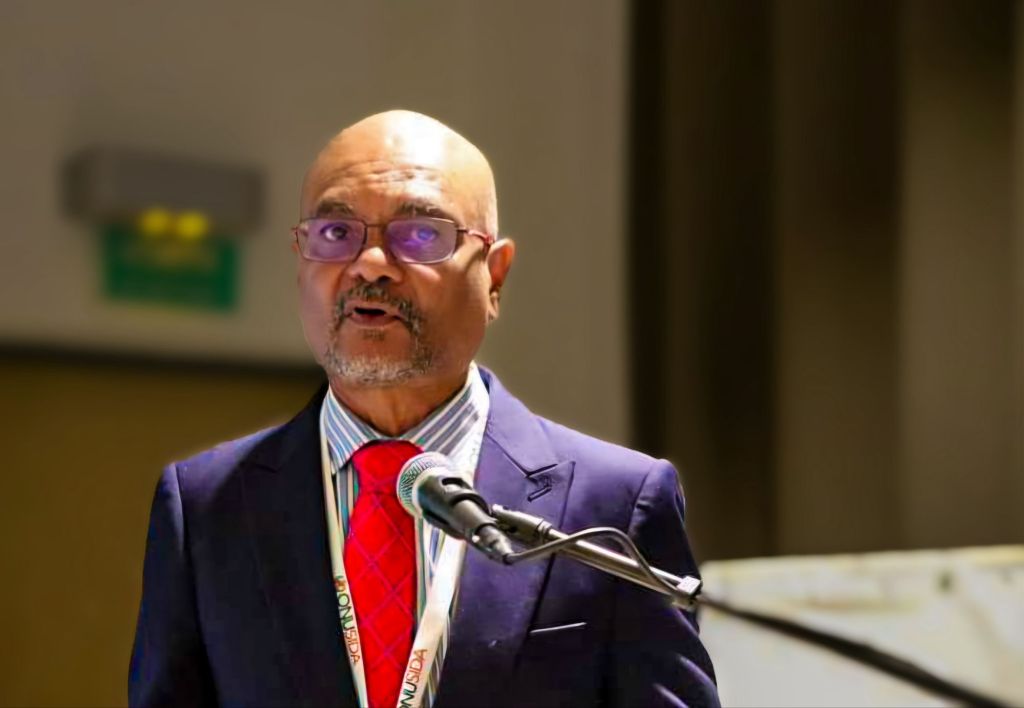
When today’s writing prompt arrived—”If you could have something named after you, what would it” be?”—I paused. As a statistician who has spent the last seven years working with UNAIDS on the HIV and AIDS response in Madagascar, I felt the tension immediately. My professional life straddles two worlds: the analytical realm of statistics and the human reality of public health intervention. This duality determines how I approach the question of legacy.
Cultural Imprints Through Naming
Naming traditions reveal our collective struggle with impermanence. In Madagascar, where I’ve worked since 2018, ancestral veneration remains central to many communities’ identities. Names carry profound significance—connecting present actions to both ancestors and descendants in a continuous chain of responsibility. I suspect it is the same in many communities worldwide.
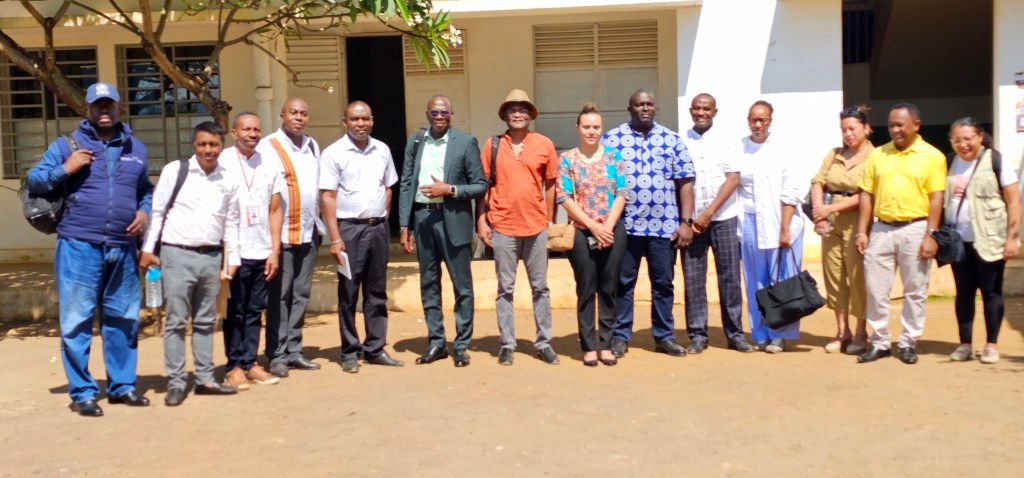
Meanwhile, in the global health sphere, initiatives often bear the names of donors or organizations rather than the individuals implementing them. During a recent community outreach program in Antananarivo, I noticed how differently local health workers and international organizations approached recognition. The most effective community health advocates often worked with little formal acknowledgment, whilst international interventions prominently displayed organizational branding on every document and at the event.
This contrast mirrors broader patterns. Scientific disciplines immortalize discoveries through eponyms—Bayes’ Theorem, Fisher’s Exact Test. These discoveries create intellectual lineages that sometimes span centuries. Yet, the most successful public health interventions often become so integrated into communities that their origins fade from memory. This is an example of impact in its truest form.
The Psychology Behind Our Desire for Legacy
Erik Erikson identified “generativity versus stagnation” as a crucial developmental stage wherein we confront our mortality by creating something that would outlast us. After years of working with communities affected by HIV and AIDS, this resonates differently with me. The questions of continuation and impact are not abstract but immediate and vital.
Research in ‘terror management theory’ suggests our legacy-seeking intensifies when we face mortality reminders. Working in HIV and AIDS response means confronting mortality regularly. This is not abstract, but through the lived experiences of the affected communities. This proximity has made me question what truly constitutes meaningful continuation.
The statistical dashboards I help develop and implement the national response, and UNAIDS track the population-level changes, yet behind each percentage point are individual stories. My most fulfilling work happens not when creating elegant models, but when those models translate into information and decisions for more effective resource allocation that directly impacts and improves lives. This is regardless of whether one’s name appears anywhere in the process.
Mindfulness Perspectives on Named Recognition
Buddhist philosophy offers the concept of anatta (non-self). This is the understanding that our identities aren’t fixed entities but ever-changing fluid processes dependent on conditions. From this perspective, attaching to recognition implies clinging to an illusion.
During a retreat last year, our teacher quoted Thich Nhat Hanh: “The most important continuation of yourself is not your name attached to something, but your insight continuing in others.” This quote reframed legacy entirely for me. Perhaps the statistical methods and contribution to the HIV and AIDS response I’ve supported in the implementation of Madagascar’s HIV and AIDS response and monitoring systems might never bear my name, but their impact on healthcare delivery continues nonetheless.
Jon Kabat-Zinn suggests that mindfulness practices help us distinguish between natural desires for contribution and the unhealthy attachment to recognition. Working in public health in resource-limited settings among poor communities has been a form of mindfulness education and training. It is a constant reminder of what truly matters versus what the ego desires.

A Statistician’s View of Legacy in Public Health
Statistics, incidentally, may offer illuminating parallels for understanding legacy. The concept of signal-to-noise ratio reminds us that meaningful impact requires contributions distinctive enough to rise above random variation. In Madagascar’s HIV response, this means distinguishing between impactful interventions that create lasting change versus those that merely create temporary statistical improvements.
Probability distributions demonstrate how even significant contributions face uncertain futures. Models I worked with early in my UNAIDS work have already been superseded by newer approaches—not because they failed, but because knowledge evolves. This impermanence initially troubled me until I recognized that their purpose was always improvement, not permanence.
My experience developing monitoring systems that local health officials now use independently taught me something unexpected: practitioners rarely concern themselves with a method’s origins once it proves useful. The value lies in application rather than attribution. This is a humbling realization that actually brought relief.
Ethical Dimensions of Naming
There has been important reconsideration of naming practices in recent years globally. This resonates particularly well in international development work, where there’s growing recognition of colonial legacies embedded in how programs and interventions are named and framed.
In Madagascar, I’ve observed the complex dynamics where international organizations name initiatives without centering local leadership. However, the most sustainable programs often transition from externally named projects to locally identified movements—shedding their original designation as they become authentically integrated.
These transitions highlight an important truth-naming creates relationship dynamics. When we attach organizational or individual identities to contributions, we implicitly create power structures. The most ethical and sustainable approach may be ensuring these structures evolve toward increasing local ownership and recognition.
Beyond Names: Alternative Legacies
I have witnessed a profound legacy that never appears in formal recognition in Madagascar’s HIV and AIDS response. This is community health workers who implement innovative and impactful outreach approaches. As well as patients and people living with HIV who become advocates, transforming their experiences into peer education that saves lives.
My most meaningful contribution may be the advocacy for the response and the statistical capacity building among Malagasy health officials to understand the epidemic and implement national HIV and AIDS response programs. Colleagues independently use internationally recognized models, analyze trends, and advocate for resources and programs based on data they have a deep understanding of. This support and transfer of skills creates an impact that will outlast any formal program bearing external names.
Knowledge transfer represents a legacy that transcends individual recognition. When statistical monitoring shifts from externally imposed requirements to internally recognized valuable tools, transformation has occurred. Indigenous wisdom traditions have long understood this, preserving crucial knowledge through generations without emphasizing individual naming.

Personal Resolution
After seven years working with UNAIDS in Madagascar and considering this question deeply, I’ve reached an unexpected conclusion. If something were to bear my name, I’d want it to be a capacity-building fund supporting local statisticians working in public health. Not because the naming matters, but because this combination reflects values I believe worth perpetuating. Rigorous analysis that serves to inform the status of the community and planning for innovative programs for community well-being and is implemented by those with the deepest understanding of context.
Yet even this conclusion feels contingent. Perhaps the healthiest relationship with legacy is allowing it to remain an open question. That is neither rejecting recognition nor grasping at it, but simply continuing to contribute with present-moment intention.
My statistical training, mindfulness practice, and years in international public health converge on a single insight; that is, we operate under conditions of fundamental uncertainty. We do not know which of our contributions will matter the most. We equally do not know how they will transform as they move through communities. Naming may satisfy our desire for certainty, but accepting uncertainty might bring greater peace.
What would you want named after you—and what does that reveal about what truly matters in your life?


 L J Padayachy
Leave a reply to pk 🌎 Cancel reply